Interview with John Uche
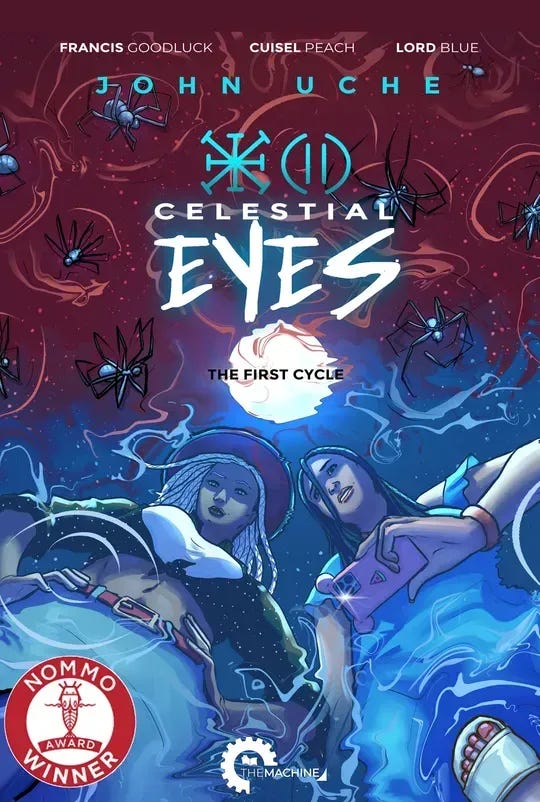
Nommo Award Joint Winner of the 2025 Best Speculative Fiction Graphic Novel by an African with artist Francis Goodluck

To celebrate the 2025 Nommo Awards, we asked our winners a few questions about their work, why the Nommos matter, and the role African speculative fiction can play in the world.
The African graphic novel genre is one of the most collaborative, often bringing together a full creative team. Celestial Eyes, Vol. I, this year’s winner, is no exception - created by writer John Uche and artist Francis Goodluck, alongside letterer Cuisel J. Peach and editor Lord Blue.
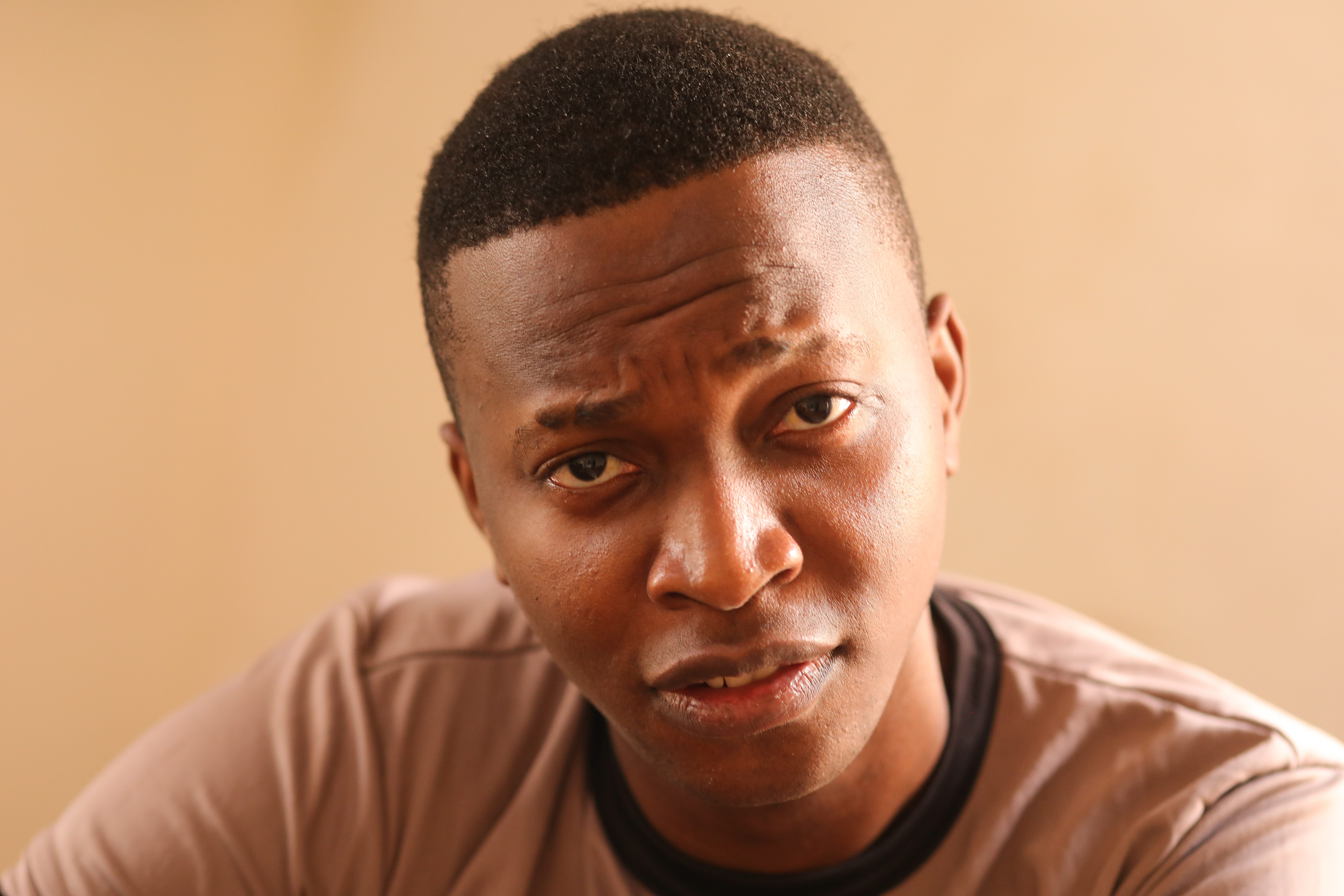
John Uche is an eccentric writer, poet, and lover of good stories. Professionally, he’s chosen to vary his writing in forms such as ghost-writing for books, scripting for comics and animation, and scripting for visual educational content. He has played the role of editor in a couple of projects. When he is not reading anything he can lay his hands on, John Uche is making himself something to eat. He’ll tell you that he’s not a foodie, just a man who loves to eat. Follow him online at https://www.instagram.com/wolfof_bende/
What does this Nommo Award mean to you?
The Nommo award means a great deal to me; it is my first in both nomination and win, and it also comes with the realisation that my storytelling and writing style are what people enjoy. I am excited, thrilled, and honoured.
African storytelling is a beautiful form of art, regardless of how it is presented. We are indeed on the verge of a worldwide African storytelling boom, but there is a whole lot that needs to be done, a whole lot more stories to be told, so yes, the Nommo award to me is a reminder that if our stories come from the stars, those stars shine bright from within us.
Can you tell us what inspired you to write your book? What are the main themes that readers can look forward to?
I am a fan of folklore and horror; Celestial Eyes was primarily born from a mix of both. I wanted to tell a different type of African/Nigerian story, one that possesses familiar tropes but is told from an unfamiliar place.
Spirituality is a significant part of any African culture, including my own Igbo culture. The question I had to answer while writing my book was, “How can I tell of the beautiful aspects of the Igbo Odinadi while balancing it with my fascination with astronomy?”
Celestial Eyes became that answer.
What is exciting you about African Speculative Fiction? How is African SF being viewed in your country of origin/country of residence?
Oh, I am more excited by how limitless the potential it presents us with is. Through speculative fiction, there is so much we can learn and absorb and enjoy and consume and everything else, all at once.
Whether it’s explosive fantasies or fast-paced sci-fi thrillers, stories of worlds unknown and tales of not-so-distant lands, Nigerian writers are slowly leaning into the allure of speculative fiction. Perhaps it is because it is less limiting, especially while cooking up a world to tell your story in, or perhaps there’s more to it than meets the eye; all I know is that the future is bright for speculative fiction in Nigeria.
What books are currently on your bedside table?
I just got to reading Nkereuwem Albert’s The Bone River and Firstborn of the Sun by Marvellous Michael Anson. In the graphic novels section, I have been feasting on Akogun: Brutalizer of the gods by Murewa Ayodele and Akonade Dotun.
For our readers, which emerging African SF writers are you following?
Chisom Umeh is a writer whose work I am glad to have discovered. He is not an “emerging African SF writer” in the sense of the word, but his works so far have that pull that I always look forward to whenever I’m reading a work of Speculative Fiction.
What are of your personal interests or other activities that inspire your work?
As a kid, I had this weird habit of getting obsessed with a random subject matter, field of study, or topic altogether. What would follow is weeks of studying and consuming whatever I can about that topic. This habit laid the groundwork for my interest in other indigenous communities, and soon, I found myself falling in love with many cultures.
This habit of mine is also the reason I find it necessary to incorporate random pieces of information I’ve consumed into my writing. Astronomy, biology, world history, and even weird traits of species of animals, anything can find its way into my writing as long as it serves the purpose of elevating and driving the plot.
Now that I think about it, I might just be a knowledge nerd! However, the world has a great deal to offer, drawing from its past and present. I’m fascinated and inspired by all of it, enough to have it in my work. I suppose this is what ultimately matters in the end.
Does African SF play a role in decolonising futures and can it offer an alternative to the dominant imaginaries of the future?
What models can arise from this whether as African focused local approaches – does it serve the societies that it represents?
Of course, it can play a role in decolonising the future! Yes, it can offer an alternative.
Let’s think about it this way: storytelling can be a lot like starting a society. You build on ideals and truths to drive your characters in the plot, just as ideals in a society are built on to drive toward a better future, yes?
African SF can be used as a system of presenting morally positive norms and idealistic societies to the hearts and minds of readers and scholars alike, especially if the SF writer has a vision of what they want. Yes, many politically driven African SF can suffer from the influence of whatever horrible event the writer may have gone through. However, as a form of storytelling, it still serves the purpose of enlightening!
As writers, African writers of SF, if we cannot tell our stories through our eyes, if we cannot build new worlds through our imagination, worlds that reflect our past and present African societies, then we are making the younger generation unable to define and defend their society due to the influence of those who don’t know what it’s like to be them or live in their world.
Whatever bright future we dream of can come from the action of another’s imagination. A beautiful retelling of the past as African SF can inspire a new generation to have a better future for themselves.
Climate change has been called the “new colonialism” by some commentators as African nations will continue to bear the weight and damage and sacrifice zones. We noticed that there is a lot more African SF focus on this theme and its increasing.
How can African SF help drive the change and collaboration that is needed for climate change? How can we use African SF to deepen local discourse and resilience?
The concept of a dystopian future ruined by climate change is nothing new to storytelling and readers alike; similarly, we, as Africans, understand that the world isn’t the same way as it used to be. I’m not a fan of being super-pessimistic, despite how realistic I can be, but climate change is as real a threat as anything else, so I think that the real question should be: what do we do about it, even as writers of SF in Africa?
Well, we write about climate change not as a Boogeyman, an entity with a name that one must not mention, or a reaper who has come to collect, but as something that can be understood. Get people interested in the effects of climate change in your African SF by expanding on it enough to make them study how they can use XYZ to stop the possibility of that happening in the real world, their real world.
We learn better when our interest is piqued about things, and one action can trigger a positive mass response, inspiring a desire to save our planet.
So moving to lighter topics, what book do you wish you had written?
There isn’t a book that I can think about off the top of my head that I wish I had written, but there are two books with concepts, delivery, and ideals that I have found myself drawn to, and they are both by Paul Louise-Julie: The Pack and Yohancé.
So, what’s coming up for you? What are you working on right now?
What’s about to be published?
The second volume of my graphic novel, Celestial Eyes, has already passed the production stage and is on its way to release. I plan to expand the world through the addition of prequels and spin-offs.
Truthfully, I also want to try my hand at other African SF titles. Perhaps I’ll experiment with an urban story that contains elements of horror and sci-fi, but the main thing is that I am interested in telling more stories.
Celestial Eyes will return for a third volume sometime around 2026, but keep your eyes and ears open for any graphic novel or one-shot I might be releasing in the not-so-distant future.
What’s is your guiltiest culture pleasure?
The food and meals that are indigenous to each culture.