Interview with Wole Talabi
Nommo Award Winner of the 2024 Ilube Best Speculative Fiction Novel by an African

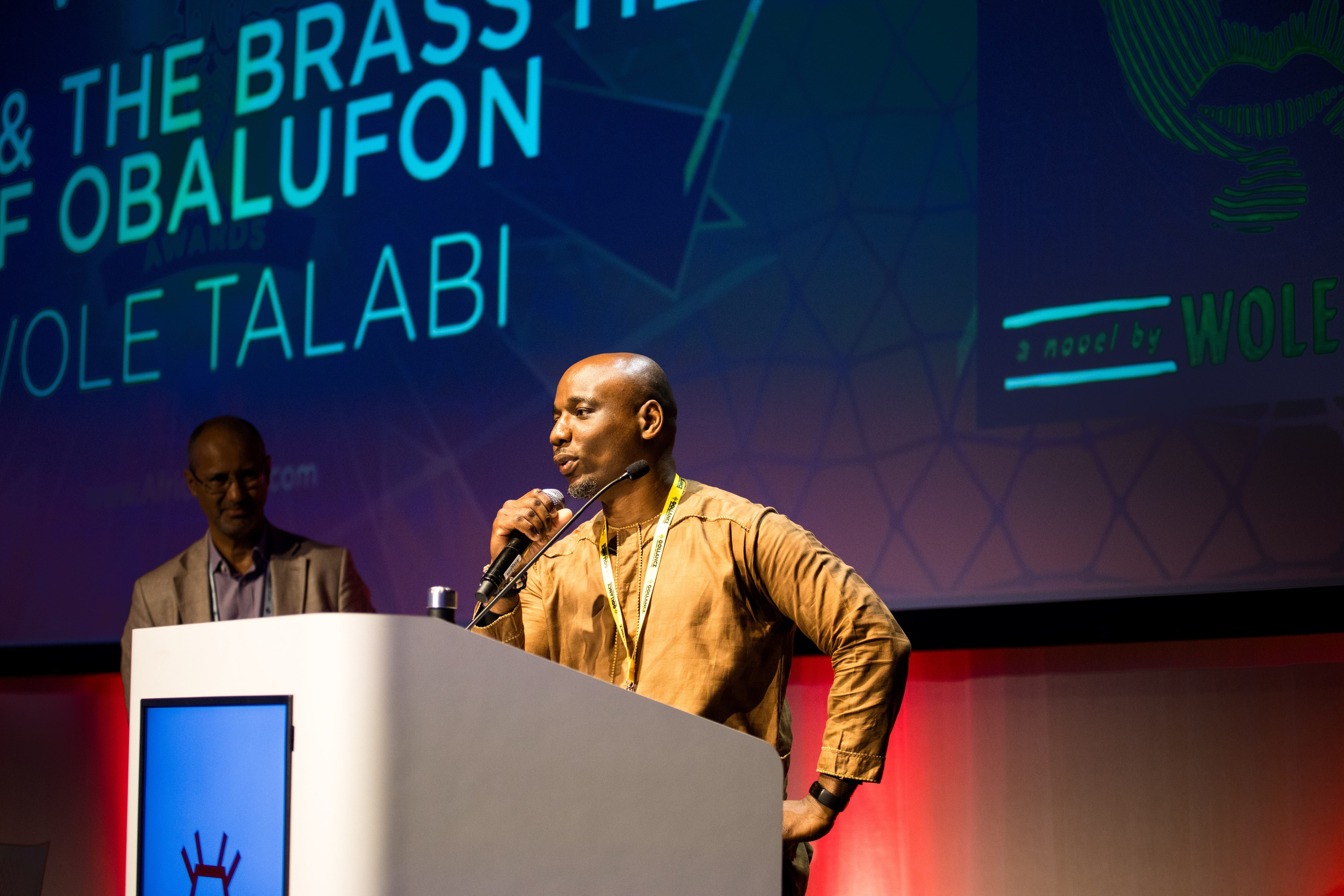
In the run up to this year’s 2025 Nommo Awards Ceremony to be held at the Ake Arts and Book Festival in Lagos, we caught up with last year’s winner, Wole Talabi, to ask for his thoughts on the impact of the Nommos, African SF, and what’s exciting him right now.
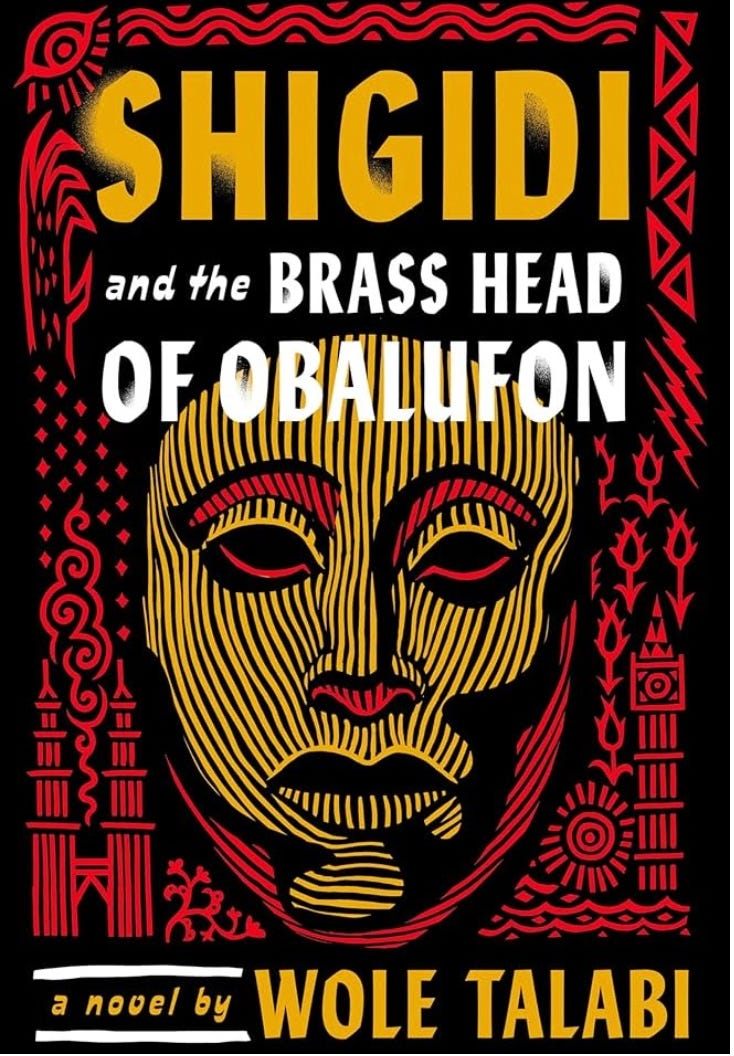
Wole Talabi is a Nigerian engineer, writer, and editor. He is the author of the 2024 Nommo Award Winner and World Fantasy Award–nominated novel Shigdi and the Brass Head of Obalufon, named one of The Washington Post’s Top 10 Science Fiction and Fantasy Books of 2023 and nominated for many major awards. His short fiction appears in the collections Convergence Problems and Incomplete Solutions. He has edited five anthologies, including AfricanFuturism: An Anthology and Mothersound: The Sauútiverse Anthology. He enjoys scuba diving, elegant equations, and oddly shaped things, and currently lives in Australia. You can find him online at wtalabi.wordpress.com and @wtalabi.
What does this Nommo Award mean to you?
A lot, especially since its my last one.
The Nommo award means that my peers read and enjoyed my work and thought highly enough of it to nominate and vote for it. That engagement with work is valuable. And now that I have recused myself from the awards going forward, I am excited to see what other works and authors the community chooses to engage with and honour.
Can you tell us what inspired you to write your book? What are the main themes that readers can look forward to?
In my novel Shigidi and The Brass Head Of Obalufon, I reimagine the Orisha as a corporation that trades in faith and belief. It’s a character-driven godpunk thriller in which a former Yoruba nightmare god, an ancient succubus, and a reincarnated Aleister Crowley team up for a heist to retrieve an item (the titular brass head) from the British Museum. But of course, it’s more than just a heist story, it’s also a globe-trotting historical story, a love story, a story of self-discovery and a bit of a social satire about capitalism, cultural theft, and the fundamental nature of faith. All of which is enabled essentially reimagining this West African pantheon into the shape of the large forces that are very much part of our lives – capitalism, globalization, and religion. In that way, I use the Orisha to interrogate belief itself as a kind of power. That’s the main theme of the book. Looking at different kinds of belief too – self-belief, love-as-belief, sex, fear, belief in a higher power, all of that is explored.
I was drawn to those themes because I’ve always found faith, religion, and power fascinating. Especially when they are represented in a cultural pantheon, so I wanted to investigate that using Shigidi, the lowly nightmare god who goes on a journey of discovery in the book. The character of Nneoma (the co-protagonist) also comes from elements of Jewish mysticism about the succubus as well as my response to classic Nigerian movies like Nneka, the Pretty Serpent (1994) which always struck me as movies about fear of feminine power. And then there’s the heist at the British Museum, which is the third element that makes the novel. I used to live in London, but when I went back in 2018 for the Caine Prize award ceremony, I visited the British Museum again and I was more aware of just how many things in that museum were of questionable provenance, held there against the will of the people that owned them in the first place. I wanted to liberate those items from the museum and that emotion is what translated directly to the heist framing of the novel.
What is exciting you about African Speculative Fiction? How is African SF being viewed in your country of origin/country of residence?
The sheer scope and variety coming through. We have Pemi Aguda’s literary and numinous debut collection Ghostroots. Tlotlo Tsamaase’s raw, lyrical and incandescent SF-horror Womb City, Tobi Ogunidran’s concise fantasy epic In the Shadow of the Fall, Nikhil Singh’s provocative, mesmerising and wild SF thriller Dakini Atoll, M.H Ayinde’s epic doorstopper A Song Of Legends Lost. And so much more. I am also very excited to see what the new African SF Imprints like Pheonix Books put out in the next few years. I saw they just announced their first acquisition and look forward to more details in the coming years.
What books are currently on your bedside table?
I am currently finishing the aforementioned A Song of Legends Lost by M.H Ayinde and starting Club Contango by Eliane Boey. I am also dipping in and out of Spook: Science Tackles The Afterlife by Mary Roach.
For our readers, which emerging African SF writers are you following?
“Emerging” is hard to define since it depends as much on the observer as the author. So, for simplicity, I’ll take it to mean writers who haven’t yet published a novel with a traditional press. I think I already mentioned a few but some others whose work I have recently enjoyed and am looking forward to more of include Uchechukwu Nwaka, Gabrielle Emem Harry, Victor Forna, Kola Heyward-Rotimi, Shingai Njeri Kagunda, Adelehin Ijasan, Kofi Nyameye, and Makena Onjerika.
What are of your personal interests or other activities that inspire your work?
I absolutely love scuba diving. There is something amazing about being underwater. Its s whole new part of our world. Disorienting and beautiful and strange. I find it extremely relaxing and also a great proxy for thinking about being in outer space. I also really enjoy martials – both watching them and practicing them for exercise, which in turn inspires a lot of my fight scenes. If you follow me on Instagram, you can probably find random videos of me shadowboxing or drilling combinations.
SF in the Northern Hemisphere has had a history of being utilised by society, media, security services. In the last few years, there has been a lot of interest in what is developing in African SF. How do you see African speculative fiction helping us define and navigate towards desirable futures and playing a wider role within the continent of Africa?
I’ve written an essay about this before - Why Africa Needs To Create More Science Fiction. I think the key point is in SF’s ability to foster imagination which in turn can help Africans engage organically with challenging conceptual questions and decisions planning the future which is the foundation of real- life policymaking and technology development.
Does African SF play a role in de-colonising futures? Can it offer an alternative to the dominant imaginaries of the future? What models can arise from this whether as African focused local approaches – does it serve the societies that it represents?
Yes. Yes. And Yes?
To me, the future represents possibility and potential. It’s not simply about advancing forward in time. In fact, one of my favourite observations is that in almost all physics’ equations, time can take on positive or negative signs and is thus reversible. There is no real fundamental reason (at the equation level anyway) why time should only move in one direction even though we all seem very much constrained to experience unidirectional time thanks to entropy. From Einstein’s theory of special relativity which posits time as an illusion relative to an observer, to theories of the African philosophy of time as being non-linear and event oriented, ‘the future’ is a tricky concept to pin down and there are many ways to think about it. Which means that every way of thinking about the future should be grounded in the philosophy of the society it is meant to serve. The way they want to exist together. Only they can define it and that requires imagination and a keen awareness of the past. If not, someone’s else’s future will be imposed upon them.
Climate change has been called the “new colonialism” by some commentators as African nations will continue to bear the weight and damage and sacrifice zones. We noticed that there is a lot more African SF focus on this theme and its increasing. How can African SF help drive the change and collaboration that is needed for climate change? How can we use African SF to deepen local discourse and resilience?
Another topic I’ve written about before as part of an introduction to Kampala Yénkya: a game for imagining alternative climate futures. The main thing I believe SF can do is emphasize that climate change is not inevitable, that there are other ways of thinking about our relationship to the planet. And by telling stories we can foster learning and action in an accessible way that eventually, can percolate down to the level of individual and collective action.
So moving to lighter topics, what book do you wish you had written?
None really. I don’t think there is any book I wish I’d written because no book I’ve read comes at things and characters the exact same way I would. That being said, there are books that have ideas and elements I wish I had come up with and explored in my own way. A few recent-ish examples are Embassytown by China Miéville, The Mountain In The Sea by Ray Nayler, Too Like the Lightning by Ada Palmer, Rosewater by Tade Thompson and The Years Of Rice And Salt by Kim Stanley Robinson.
So, what’s coming up for you? What are you working on right now? What’s about to be published?
My science fantasy novella set in the Sauútiverse – the first African SFF collaborative shared world came out earlier this year in Clarkesworld magazine. It’s a planetary exploration story called Descent and is available to read/listen to for free online. There are also many stories set in the Sauútiverse being written right now including forthcoming Sauúti Terrors anthology (which I also have a story in) and Eugen Bacon’s Crimson In Quietus. So, I’m excited about those.
What I’m most excited about though is my second novel The Fist Of Memory, which was just announced. It’s a near-future science fiction thriller that is also a meditation on the nature of memory, legacy, and connectedness featuring assassins, aliens, AI, ancestral memory, and a lot more.
I also have a few short stories that will come out in the next year or so, including Finale a sequel to my space opera story Encore. This one is set even further into the future and goes all the way to the end of the universe and beyond. I also have another story called Perpetual God Machines Of The Ancestral Kind, set in the same alternate history as my Hugo nominated A Dream Of Electric Mothers. Information on where both stories will be published and when should come soon, so stay tuned.
What’s is your guiltiest culture pleasure?
Ha! I don’t really feel a lot of guilt about mine or anyone else’s cultural enjoyments, but I do have a soft spot for trashy horror movies like Sharknado, Jason X, Bride Of Chucky, etc.
i’ve read a lot of Gabrielle Emem Harry, I’m such a fan !!
Grrat questions, great answers!